Leaders need to move faster to curb climate misinformation
By Eleni Myrivili Thu, Mar 5, 2026
Earlier this year, the European Union (EU) endorsed the Declaration on Information Integrity on Climate Change, which establishes international commitments to addressing climate disinformation.
First launched at the COP30 climate conference last year, the declaration makes one point clear: protecting climate action requires protecting truthful climate information. It calls on governments to make information integrity part of official climate policy, not an afterthought.
Misinformation is a growing threat for the region. In the summer of 2025, as Southern Europe faced another devastating wildfire season, social media in several Mediterranean countries was flooded with the narrative that forest fires were intentionally set to clear land for renewable energy projects, wind farms, and solar parks. The story was perfectly calibrated for viral outrage.
But these conspiracies are not unique to any one region. During the January 2025 Los Angeles fires, public discourse shifted away from climate change, as claims that local officials or corporate actors had deliberately started or intensified the fires using technologies like lasers or by withholding and diverting away water resources.
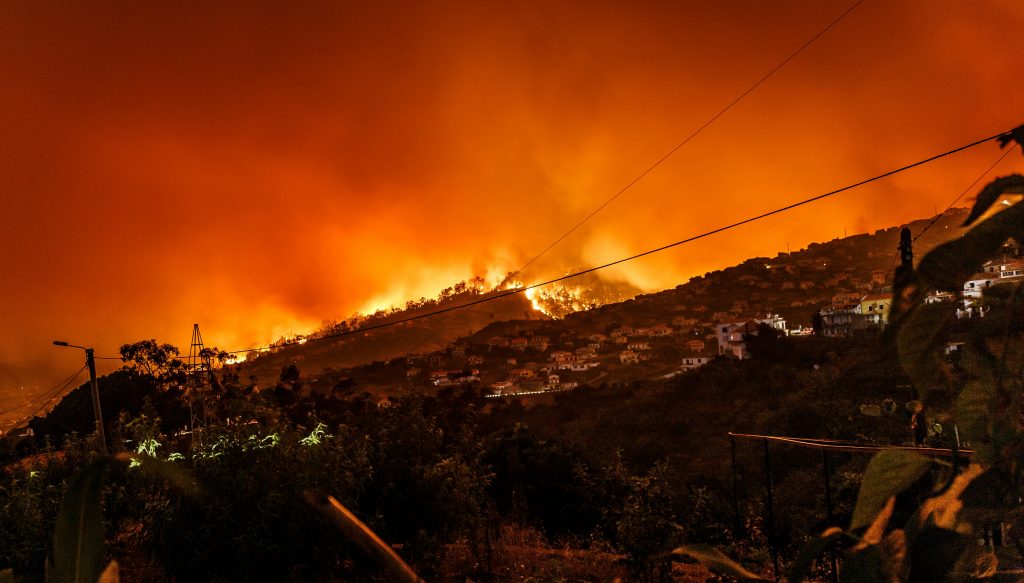

Such claims follow a familiar pattern. When wildfires or other climate hazards erupt, dangerous, ill-informed, and specious narratives pour in, having been repackaged to fit local political tensions and regulatory debates. Misleading and false information is spread through social media accounts on platforms that have scaled back or dismantled content moderation systems, reduced fact checking, and pared back enforcement against hate speech. At the same time, millions of people now consume news primarily through algorithmically curated feeds on their phones, where content is ranked for engagement rather than accuracy. In this environment, misinformation is not an accident of the system; it is a predictable output of it.
From climate denial to climate delay
As documented by the Intergovernmental Panel on Climate Change in its Sixth Assessment Report, climate misinformation has been linked to actors with vested interests in delaying decarbonization. Their strategies have shifted recently from outright denial to what researchers call “delayism,” discrediting scientists, attacking climate solution supporters, and questioning the feasibility and social fairness of climate action.
The 2025 Information Integrity About Climate Science: A Systematic Review shows how oil-rich states and fossil fuel companies benefit from these narratives and, work with lobbyists and think tanks to affect targeted decision makers as well as the public.
Analysis by DeSmog shows how several European fossil fuel and petrochemical companies have deployed social media ad campaigns featuring selective or misleading “green” claims about their transition and commitment to renewable energy. The sector in effect invests less than 3 percent of their total capital expenditure into clean energy, while continuing oil and gas field exploration and expansion. Industry-linked campaigns resemble earlier tobacco disinformation strategies: amplifying uncertainty to slow policy change.
The viral path from doubt to conspiracy
But through social media algorithms, misinformation can quickly evolve into full blown conspiracy theories. And as global crises such as climate change, geoeconomic shifts, or pandemics intensify, the psychological appeal of misinformation and conspiracy narratives grows. Studies in political psychology show that during periods of uncertainty and fear, people are more likely to gravitate toward simplified explanations with clear villains, dehumanizing perceived opponents and deepening polarization.
Climate misinformation, disinformation and conspiracy theories are particularly popular among right-wing, nationalist, and populist political actors, where misinformation can be a powerful tool to mobilize followers and voters. Russia-funded bot farms and trolls, media outlets, and influencers amplify misinformation on social media. However, European leftist movements—particularly in Greece, Spain, Italy—also circulate climate disinformation narratives wildly, rejecting green energy from an anti-corporate perspective, which paradoxically serves fossil fuel corporate interests.
All this matters because it does more than distort facts; it distorts risk.
By redirecting blame for extreme weather from climate change to shadowy plots, these narratives blunt the political urgency needed to address the real drivers of the crisis. By eroding trust in scientists and institutions and reframing climate solutions as existential threats, disinformation networks can delay action for years—a delay that carries profound economic and planetary costs.
It also reduces the pressure for major emitters to invest in the energy transition, which is especially concerning since there are early signs that the industry is reprioritizing. At COP28, the presidency launched the Oil and Gas Decarbonization Charter to motivate decarbonization in oil and gas companies’ operations. While it has faced criticism for its limited scope, it is a signal that the industry can—and must increasingly—reimagine its role in climate positive messaging and action.
What’s the way forward?
Disinformation has ranked as one of the most serious global risks for three years running. False narratives—especially on climate—can alter energy security trajectories, strain alliances, and weaken geopolitical cohesion. They undermine trust in scientific authority and public institutions, distorting energy policy choices, delaying investments in clean technologies, and shaping national energy trajectories in ways that compromise long-term security.
Policymakers have the paramount responsibility to safeguard and regulate both the truthfulness of content and the diversity and independence of public information. Government officials must provide up-to-date, accurate climate information through national media but also uphold platform transparency and moderation standards.
The implementation of regulatory frameworks for algorithmic designs that prioritize accuracy over virality is urgent, while long-term educational campaigns can build resilience against identity-driven misinformation. Together, these measures can throw a wrench in the feedback loop that embeds falsehoods in information platforms and disrupts democracy, social cohesion, economic development, and international security.

Eleni Myrivili is the global chief heat officer for the Atlantic Council’s Climate Resilience Center and UN-Habitat. She is also a member of the European Union Mission Adaptation Board and the board of the World Economic Forum’s Global Risk Report.