The thirty-first UN Conference of the Parties (COP31) in Antalya, Turkey is just a few weeks away. This year, the annual conference is taking place amid warning lights. Researchers and weather forecasters are modelling growing risks in this hotter climate. This year’s “Super” El Niño is projected to be one of the strongest recorded since 1950.
Long-term trends are also gaining coverage. In September, the UN Environment Programme highlighted the inevitability of exceeding 1.5 degrees Celsius warming. This raises the bleak question of how unprecedented the earth’s weather will be in five years, let alone in fifty.
This follows a summer in which an estimated 50,000 people died in Europe from brutal heat waves. Dozens of other countries around the world suffered through intense heat events. However, in most cases, globally, we lack the data to fully quantify heat’s toll. Attention to extreme heat’s impacts is at an all-time high, but you wouldn’t know it from looking at this year’s COP31 plans.
Heat on the COP31 agenda
As with every year, COP31 has both a “formal agenda” and an “Action Agenda.” Country delegates negotiate the formal agenda. It results in consensus decisions announced in the final days of the two-week conference. The Action Agenda, in contrast, involves actors beyond national governments, including civil society organizations and local governments. Its outcomes are largely voluntary and face the risk of disappearing quickly into memory. This year, the Turkish presidency is managing the Action Agenda while the Australian presidency is managing the formal negotiated agenda.
Extreme heat in the COP31 Action Agenda
The presidency’s third letter to the parties explicitly references “heat” three times:
- The priority on Ocean and Seas aims to “strengthen marine and coastal resilience through coordinated action on blue carbon, ocean observation, data sharing, finance, and implementation partnerships”. It references increasing “pressure from climate change through warming waters […and] more frequent marine heat waves.”
- The priority on Dynamic and Resilient Health Systems references heat as one of the main contributors to the projected hundreds of thousands of additional deaths between 2030 and 2050.
- The priority on Climate-Resilient Cities aims to “reduce cities’ exposure to climate risks including heat waves by accelerating resilient infrastructure, sustainable housing, and low carbon urban systems.”
In the Action Agenda, extreme heat is present everywhere and nowhere.
The Turkish presidency’s priorities include urban climate resilience, health systems, and oceans and seas. The presidency recognizes heat as a growing risk across these sectors. However, it is not elevated as a priority around which to organize implementation or measure progress in building resilience.
Under the climate resilient cities track, the presidency identifies “reducing energy use intensity in the building sector by at least 25 percent by 2035” as its implementation milestone. There is reference to cooling-related energy demand, but the milestones do not address the myriad ways that extreme heat affects urban systems.
Other tracks are even less specific. There are no implementation targets in the health system or ocean tracks. Other relevant tracks such as food systems don’t mention heat directly at all. Parties often bundle action on heat resilience into broader ideas of climate resilience, despite heat’s outsized effect on human health. At a moment when the impacts of extreme heat are reaching new magnitudes around the world and a plethora of new initiatives focused on protecting people from heat are emerging, this is a lost opportunity to harness that momentum on a global scale.
Heat on the negotiated agenda
This year, formal negotiations at COP appear to be narrowing in focus to a few key issues: the perennial challenge of climate finance, the growing challenge of electrification and meeting energy demand, and reducing reliance on fossil fuels.
The Global Goal on Adaptation is the negotiated process developed to measure whether countries are protecting people from climate impacts. Last year, it adopted fifty-nine indicators at COP30, but not one is specific to heat. In fact, parties proposed a heat-specific indicator that didn’t make it into the final document. Whether any of the fifty-nine indicators capture heat deaths will be settled by technical work under the Belém-Addis Vision. The vision is a two-year effort to define the metadata and methods behind the indicators. At this year’s Bonn Climate Change Conference, negotiators could not agree on the composition of the task force, delaying its establishment. Countries plan to address this larger question at COP32. However, the indicators themselves cannot be revised until after the second Global Stocktake in 2029.
The world is waking up to heat resilience
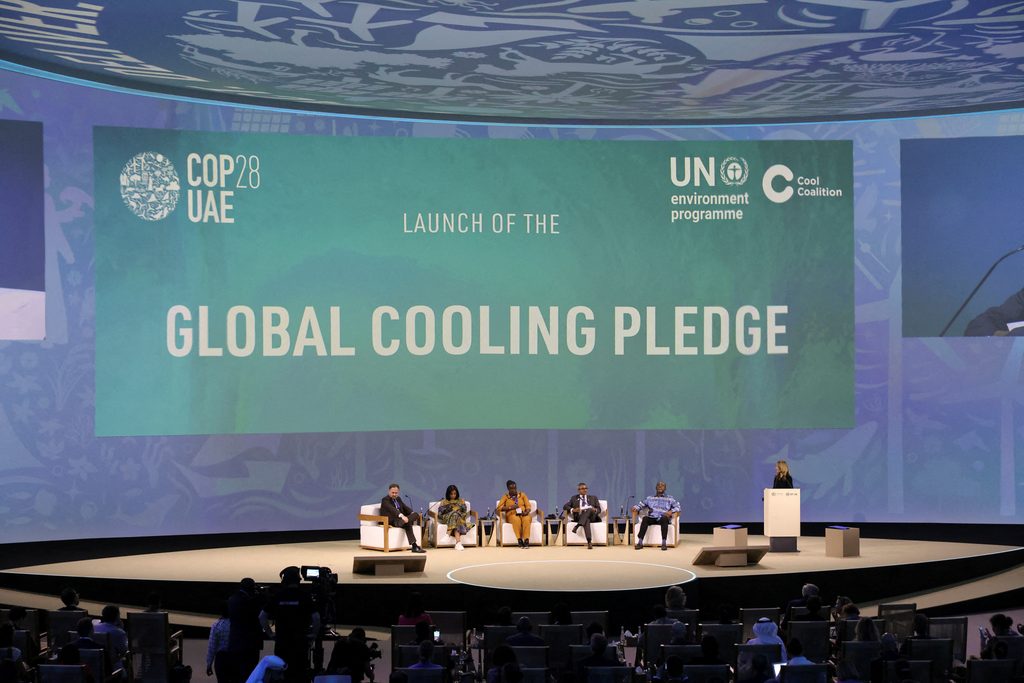
Since the launch of the Global Cooling Pledge at COP28, some more important initiatives have indeed emerged within—and primarily outside of—the COP process. The UN Secretary General’s 2024 Call to Action on Extreme Heat triggered new initiatives across the UN agencies and other international organizations on heat resilience and continues to drive action on this topic. However, the Call to Action sits outside of COP processes. Therefore, it remains disconnected from the annual inflection point that serves as an opportunity to mobilize new commitments and reflect the highest priorities of governments.
COP30 saw some additional progress through the Belém Communiqué on Extreme Heat, the Beat the Heat implementation drive and a new Framework for Extreme Heat Risk Governance. And in the last two months, two UN-led convenings—the Global Cooling Pledge Assembly in Singapore and the Global Heat Forum in Bangkok—connected policymakers, researchers, and practitioners to announce new roadmaps and chart a way forward for global efforts around building heat resilience. During New York Climate Week, packed rooms discussed everything from heat’s impact on the energy grid and supply chains to innovation in adaptation technology and risk analytics.
A few independent efforts at COP31 led by UNEP continue to highlight heat from a cooling angle. The UNEP-convened Cool Coalition is hosting a pavilion as well as a Ministerial Dialogue on Heat Resilience and Sustainable Cooling.
Despite the emergence of important initiatives related to extreme heat over the past few years, and a couple promising events at COP31, what we can expect in concrete outcomes this year from the co-presidencies appears ultimately limited.
What’s missing from COP31?
After one of the deadliest years on record for heat-related deaths, heat has yet to be established as a cross-cutting priority at COP. Efforts remain distributed across different agencies, sectors and initiatives, and seem to lack political focus and momentum.
This is a missed opportunity, as COPs provide a recurring opportunity to mobilize governments, secure commitments, and elevate the risks that demand collective action. Though the highly structured formal negotiations are less amenable to insertion of extreme heat as a thematic priority, the Action Agenda offered the chance to:
- Include more measurable implementation targets related to extreme heat beyond a focus on cooling alone;
- Convene and organize civil society actors and governments around priorities related to extreme heat; and
- Raise attention to extreme heat within core efforts such as the Climate Implementation Bridge to advance progress on unsolved challenges around mobilizing private capital for heat resilience.
Looking ahead to COP32 in Addis Ababa, the organizers should address this gap by creating a more focused political platform to advance global efforts on addressing extreme heat risk.
For the time being—for the worst of reasons—there is no shortage of grassroots efforts on extreme heat. New initiatives aim to drive action by policymakers and catalyze research and investment into how to protect people. This fact only drives home the impression that there is a substantial divide between what is on the COP31 agenda and the growing physical risks from climate change today.

Owen Gow is the deputy director of extreme heat initiatives for the Atlantic Council’s Climate Resilience Center. He has also held positions at the Migration Policy Institute, Mercy Corps, and the International Rescue Committee.
Editorial note: The Climate Resilience Center’s global chief heat officer works with the United Nations Environment Programme (UNEP), whose heat resilience initiatives are referenced in the text above.