Where local resilience meets federal advocacy.
Effective heat resilience solutions are increasingly documented and available. However, they can be overwhelming to parse through and find relevant information at the right moment. This pressure is especially clear for local governments. When resources and time are limited, solutions must be planned for and implemented more efficiently and effectively.
That’s where the Heat Resilience Exchange (HRE) fits in. With its intentional blend of knowledge and practice, HRE brings together a collaborative of expert advisors and veteran climate leaders to bridge local insights with global best practices. This, in turn, strengthens on-the-ground responses and helps communities across the United States become cooler, safer, and more resilient.
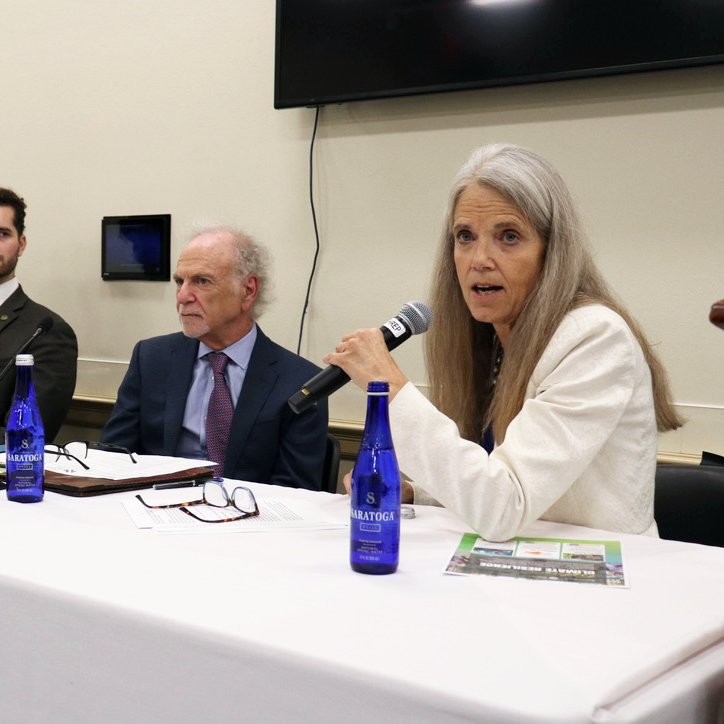
HRE closes resilience gaps for local leaders.
This cohort of fourteen local governments across the United States is designed to bridge the gaps in local climate resilience resources.
It builds on the work of the former National Integrated Heat Health Information Center (NIHHIS) Center for Heat Resilience Communities, and leverages the cohort’s impact to advocate for strengthened federal investment and philanthropic support for resilience. HRE supports proactive planning to prepare and respond to extreme heat and other climate-related impacts. Through peer learning and technical assistance from the Climate Resilience Center’s team of staff and advisors, the cohort members receive a tailored set of relevant evidence-based heat resilience practices from other US cities and counties. The Climate Resilience Center team also supports members to prepare projects, navigate political and fiscal constraints, and identify new potential sources of funding and finance.
HRE provides practical support tailored to local needs.
HRE’s staff and expert advisors support to subnational governments and organizations across the country. They offer targeted and individualized support, including through research briefs and access to proprietary risk analytics. In parallel, they amplify the members’ initiatives and polices to inspire replication and advocate for further support at the state and national levels.
Through its intentional blend of knowledge and practice, HRE offers practical support that can respond to local contexts and needs.
14
12
11
members of the HRE, including city governments, counties, and community organizations
peer-learning sessions curated and hosted since launching the initiative in September 2025
research briefs developed by the team of expert staff and advisors, tailored for local needs and context