Good COP, bad COP?
Weighing up a decade of climate multilateralism
By Jorge Gastelumendi, Daniel Stander Tue, Dec 23, 2025
Ten years on from the adoption of the Paris Agreement, the data and lived impacts tell a mixed story. Paris is working. It may not be working at the pace that everybody would like, but it’s working.
That matters.
In 2015, when the Paris Agreement was signed, projections signaled that warming could exceed 4 degrees Celsius during this century. Today, projections hover in the 2.3 to 2.5 degree Celsius range. While this falls short of what science demands, climate action has clearly delivered a meaningful bending of the emission curve.
This shift is evidence that multilateral processes can drive measurable—if sometimes insufficient—progress. Recognizing this progress is not an act of complacency; it is a prerequisite for sustaining momentum.
So, how did the 30th Conference of the Parties to the United Nations Framework Convention on Climate Change (COP30) build on that foundation? And where did it fall short? Will it go down in history as a good COP or a bad COP?
The bad COP
COP30 was arguably one of the most complex COPs in years. The world’s largest emitter had pulled out of the Paris Agreement and its president, Donald Trump, had just told the United Nations (UN) General Assembly that climate change was “the greatest con job ever perpetrated on the world“. Conflicts, funding cuts and trade wars increased the geopolitical tension. And infrastructure in Belém was still being frenetically finished as heads of state arrived.
Against this backdrop, it is remarkable that 193 countries still showed up and managed to reach an agreement at all. But let’s start with what the Belém Package did not include.
The agreement was far from ambitious. It did not even mention fossil fuels, let alone include a roadmap for transitioning away from them. A handful of countries—and their fossil fuel lobbyists—managed to hold the process hostage. This means that the world still does not have measurable timelines or financial frameworks for addressing the causes of climate change.
It also did not include a clear pathway to “halt and reverse deforestation” by 2030. These roadmaps—for the fossil fuel and deforestation transitions—were Brazilian President Luis Inácio Lula da Silva’s priorities. Despite his opening speech that emphasized these ambitions, the agreement included neither of them.
The Belém Package also fell short on funding. Notable for their absence were any debt relief and financial solidarity mechanisms to accelerate adaptation and address loss and damage for the Least Developed Countries (LDCs) and Small Island Developing States (SIDS).
These omissions are significant. They reflect a persistent gap between commitment and capability—a gap that is especially serious for communities already paying the price of climate damage. These omissions also underscore the structural limits of a negotiation model that, by design, prioritizes consensus over speed.
Excerpt from President Lula’s opening speech
“[…] Without the Paris Agreement, the world would be doomed to a catastrophic warming of nearly five degrees by the end of the century. We are moving in the right direction, but at the wrong speed.
At the current pace, we are still heading toward a rise in global temperature of more than one and a half degrees. Crossing that threshold is a risk we cannot afford to take. Dear friends, our Call to Action is divided into three parts. […]
In the second part, I call on world leaders to accelerate climate action. We need roadmaps that will enable humankind, in a fair and planned manner, to overcome its dependence on fossil fuels, halt and reverse deforestation, and mobilize resources to achieve these goals. Moving forward requires a more robust global governance, capable of ensuring that words are translated into action. The proposal to create a Climate Council, linked to the United Nations General Assembly, is a way to give this challenge the political stature it deserves.”
Excerpt from President Luiz Inácio Lula da Silva’s speech at the Opening of COP30 on November 10, 2025
The good COP
Yet Belém also showed important signs of evolution in how climate cooperation is practiced.
The Brazilian COP Presidency responded to the structural limits of multilateralism. Its first step was to recognize that diplomacy alone cannot deliver system-level change. The Presidency’s call for a “global mutirão” was a deliberate attempt to shift energy toward broad-based mobilization and collective implementation.
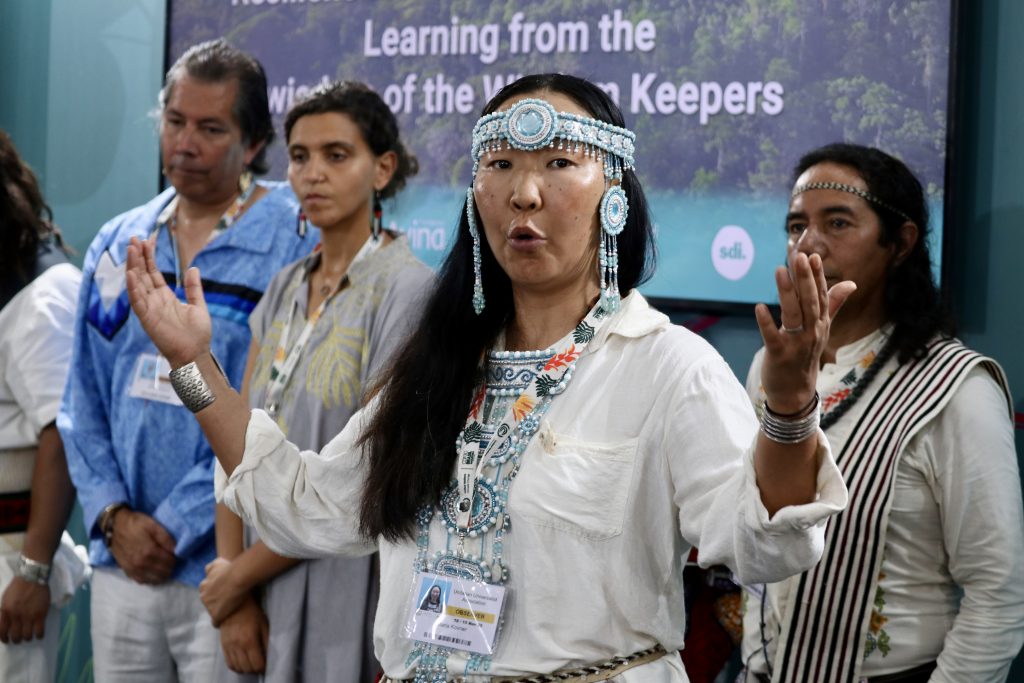
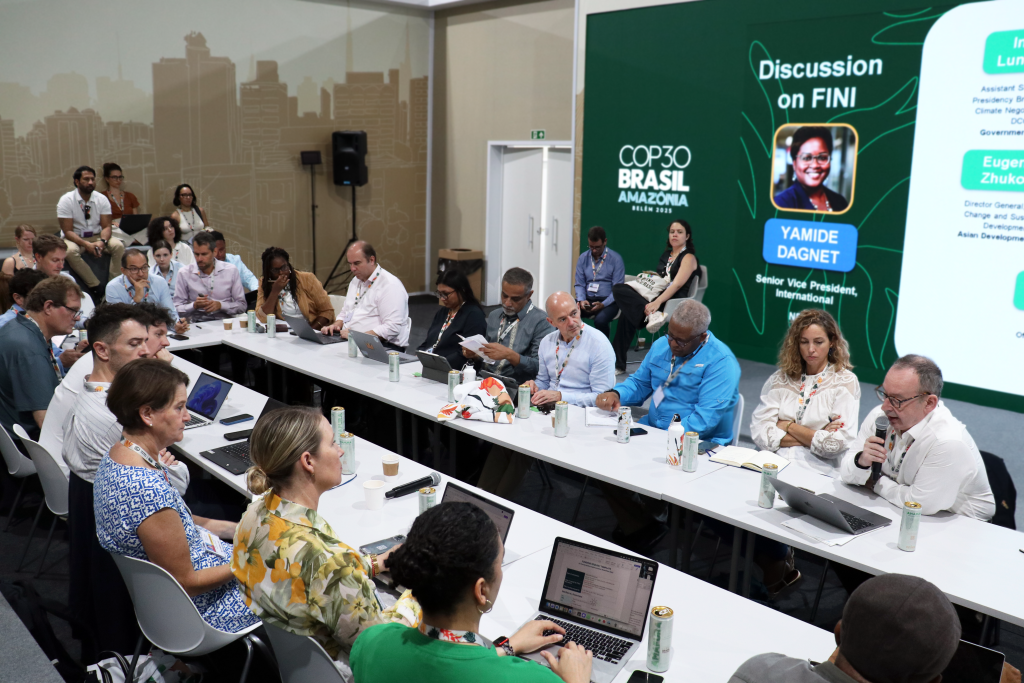
The emphasis on practical, action-oriented outcomes—rather than a sole focus on renegotiating texts—was real. It was best embodied in the Action Agenda, the Brazilian Presidency’s initiative to build on a decade of developments, like the “Race to Resilience,” led by non-state actors under previous COP presidencies and the UN High-Level Climate Champions. The agenda signalled the desire for stronger linkages between this wider set of actors and the negotiated process in order to drive progress by the 2028 Global Stocktake.
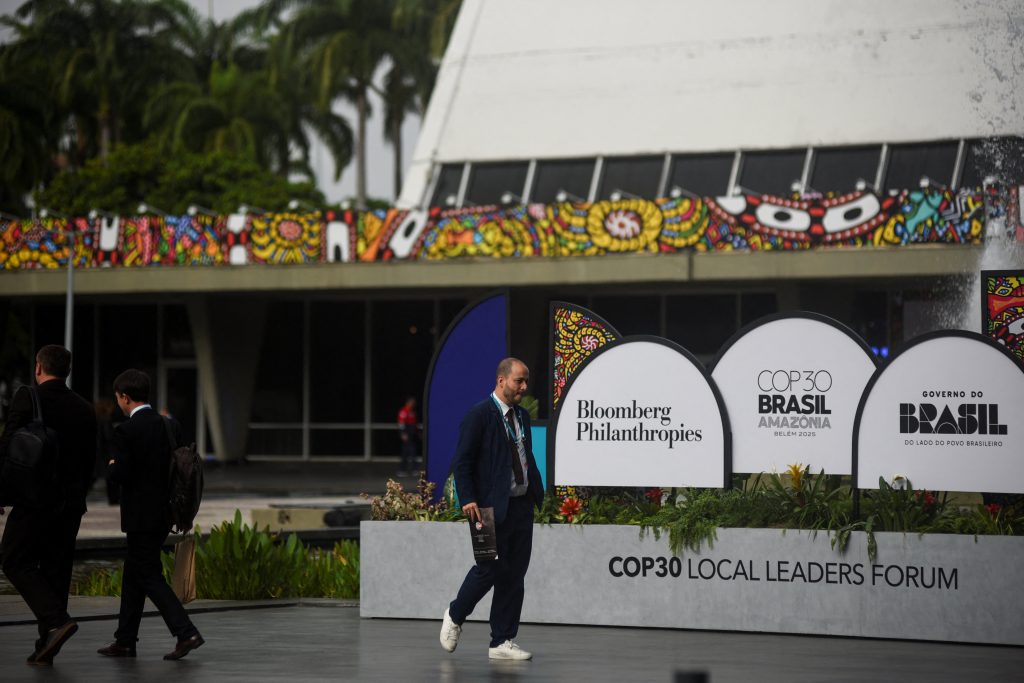
As a result, cities, financial institutions, non-governmental organizations, and other non-state actors were more central to the conversation in Belém. That reflects a broader reality: climate progress today increasingly emerges through networks of action, complementing—and sometimes compensating for—the limits of intergovernmental negotiations.
In addition, this COP was striking for the way it reframed the climate crisis as a public health crisis and social risk multiplier. Calls to place wellbeing and health outcomes at the centre of global climate efforts were increasingly loud. COP30 responded by launching the Belém Health Action Plan, a blueprint for global health systems to adapt to climate extremes. It also delivered a new Gender Action Plan that strengthens institutional recognition of gender-responsive climate action across participation, data, capacity building, and implementation. Gaps remain—not least the absence of dedicated finance—but these action plans are marked progress nonetheless.
Notably, COP30 also formally elevated the ocean—alongside forests—as a central pillar of climate strategy. The final text dropped specific language regarding the risks of deep-sea mining and solutions remain underfunded. Nevertheless, the ocean community made significant headway in policy and target-setting.
Finally, while Belém fell short of climate finance expectations, action among the private sector and civil society was significant. One clear example is our center’s own initiative: Fostering Investible National Planning and Implementation (FINI) for adaptation and resilience. With support from the Sharm Adaptation Agenda Finance Taskforce, over one hundred financial actors were mobilized to make National Adaptation Plans (NAPs) investable. The COP30 Presidency recognized the coalition for its potential to unlock real capital to address the consequences of climate change. Further, FINI will remain a central implementing partner of the National Adaptation Plans Implementation Alliance. It will advance private-sector engagement and alignment for this complementary initiative launched by Germany, Italy, Brazil and UN Development Programme in Belém. Such collaborations are an important step toward sustained implementation at scale.

Looking ahead, optimism is warranted
Paris didn’t solve climate change, but it has reduced projected emissions and projected warming.
So, ten years later, there are reasons to be hopeful. The Brazilian COP Presidency acknowledged the limits of multilateralism and experimented with creative ways to move beyond them. The very design of this COP’s processes and programs reinforced that implementation, not just target-setting, will define the next phase of progress. The international community does not need new negotiations; it needs to deliver on global commitments.
The focus on inclusive, sustainable, and equitable progress was a core focus of the conversations in Belém. There were even hints of a maturing climate regime—one that increasingly treats climate action as economic policy, preventative health care, and investment strategy, not just environmental protection.
To maintain momentum, the international community must do two things at once: be honest about how far it still has to go, and be clear that collective action is already delivering economic, social, and strategic dividends.
Yes, there is unfinished business. The gap between the current trajectory and the action needed to limit warming to the Paris goal of 1.5 degrees Celsius is real. But if Paris bent the curve, then Belém sharpened the focus on multi-actor mobilization. The next phase is about accelerating what works—at scale, at speed, and where it matters most.
Jorge Gastelumendi is the senior director of the Atlantic Council’s Climate Resilience Center. He formerly served as chief advisor and negotiator to the government of Peru, playing a critical role during the adoption of the Paris Agreement in the government’s dual role as president of COP20 and co-chair of the Green Climate Fund’s board.
Daniel Stander is a nonresident senior fellow for the Atlantic Council’s Climate Resilience Center. He serves as special advisor to the United Nations on matters of risk, analytics, and finance. Stander is also deputy chair of the board of the Resilient Cities Network.